Home Hemodialysis
Make the Best
Of Everyday
What is Home Hemodialysis?
Hemodialysis sessions are where our patients can undergo dialysis in the comfort of their homes without having to travel frequently to our clinics. The benefits of dialysis at home include the ease and convenience for the patient and their attendants as they need not travel to dialysis clinics, and the increased frequency at which dialysis can be performed due to the inherent convenience.
Safety and Comfort
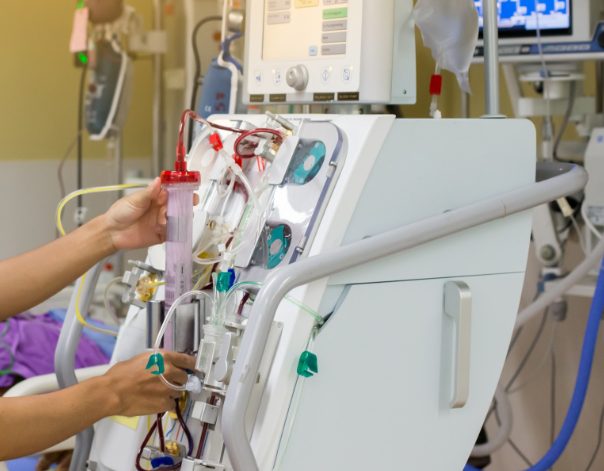
A Hemodialysis Machine, Water Treatment Plant, and other necessary equipment will be set up in the guest’s home. Water is sent for testing. If the results are within the acceptable range, we can get started with the home hemodialysis treatment. Our team of clinical staff and biomedical engineers will be regularly monitoring and maintaining all the equipment for the dialysis. Any biomedical waste generated is also taken back to the dialysis clinic and disposed off in an appropriate manner.

How Does it Work?
The first step for this treatment is to consult the treating Nephrologist and receive a prescription for home hemodialysis. Following this, our team will conduct a thorough inspection of the house for the availability of essential requirements like the quality of water, electrical points, proper drainage facility, and so on.
Benefits of Home Hemodialysis
Home Hemodialysis comes with a number of benefits. The guest and the attendant save sufficient time and increase productivity. There is ease and convenience in being treated at home and in the presence of family members. Therapy can be scheduled according to the guest’s convenience. The guest will receive the exact same facilities, therapy, and care one receives in our dialysis clinic. Most importantly, the guest will have zero contact with other guest which in itself significantly lowers the risk of infection.

Patients Unsuitable
For Home Hemodialysis
Despite the many advantages, home hemodialysis is not recommended for the critically ill. The nature of the emergency infrastructure available at the home is very rudimentary and not suitable for managing guests in critical conditions. Therefore, Nephrologists prescribe and recommend only for hemodynamically stable patients. Exceptions can be made on a case-by-case basis for immobile guests (those unable to walk or even stand).